Inventory management is one of the most critical operational challenges for retail businesses. Even small errors in stock tracking can lead to lost sales, overstocking, or customer dissatisfaction.
A mid-sized retail chain approached our development team with a significant problem: their manual and fragmented inventory processes were causing frequent stock discrepancies across multiple store locations.
To address these challenges, we built a custom inventory management system designed specifically for their retail operations. Within six months of implementation, the system helped reduce stock errors by 78% while improving inventory visibility and operational efficiency.
The Challenge
The retail chain operated multiple stores and warehouses, but their inventory processes relied heavily on spreadsheets and disconnected tools.
This created several operational issues:
• frequent stock mismatches between stores and warehouses
• manual stock updates leading to human errors
• delayed inventory reporting
• lack of real-time visibility across locations
• inefficient restocking processes
As the business expanded, these issues began affecting customer satisfaction and operational costs.
Our Approach
Before starting development, we conducted a detailed discovery phase to understand the retailer’s workflows, supply chain processes, and operational challenges.
The goal was to design a scalable inventory management platform that could integrate seamlessly with their existing retail systems.
The solution focused on three priorities:
• real-time inventory visibility
• automated stock tracking
• centralized inventory management across all locations
Key Features of the Custom Inventory Management System
Real-Time Inventory Tracking
The system tracks inventory levels across warehouses and retail stores in real time. Whenever a product is sold, transferred, or restocked, the inventory database updates automatically.
This ensures accurate stock data across all locations.
Barcode and SKU-Based Stock Management
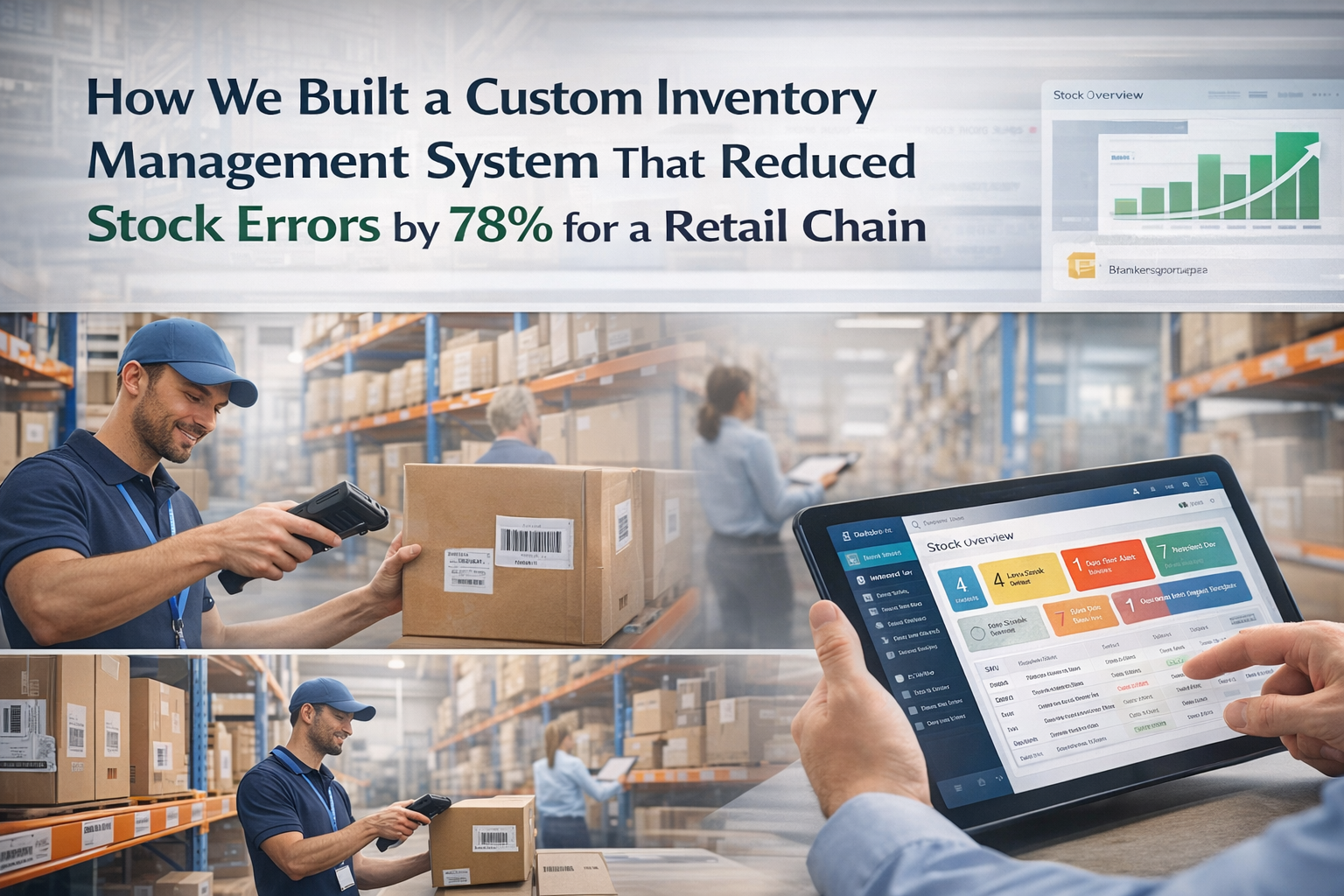
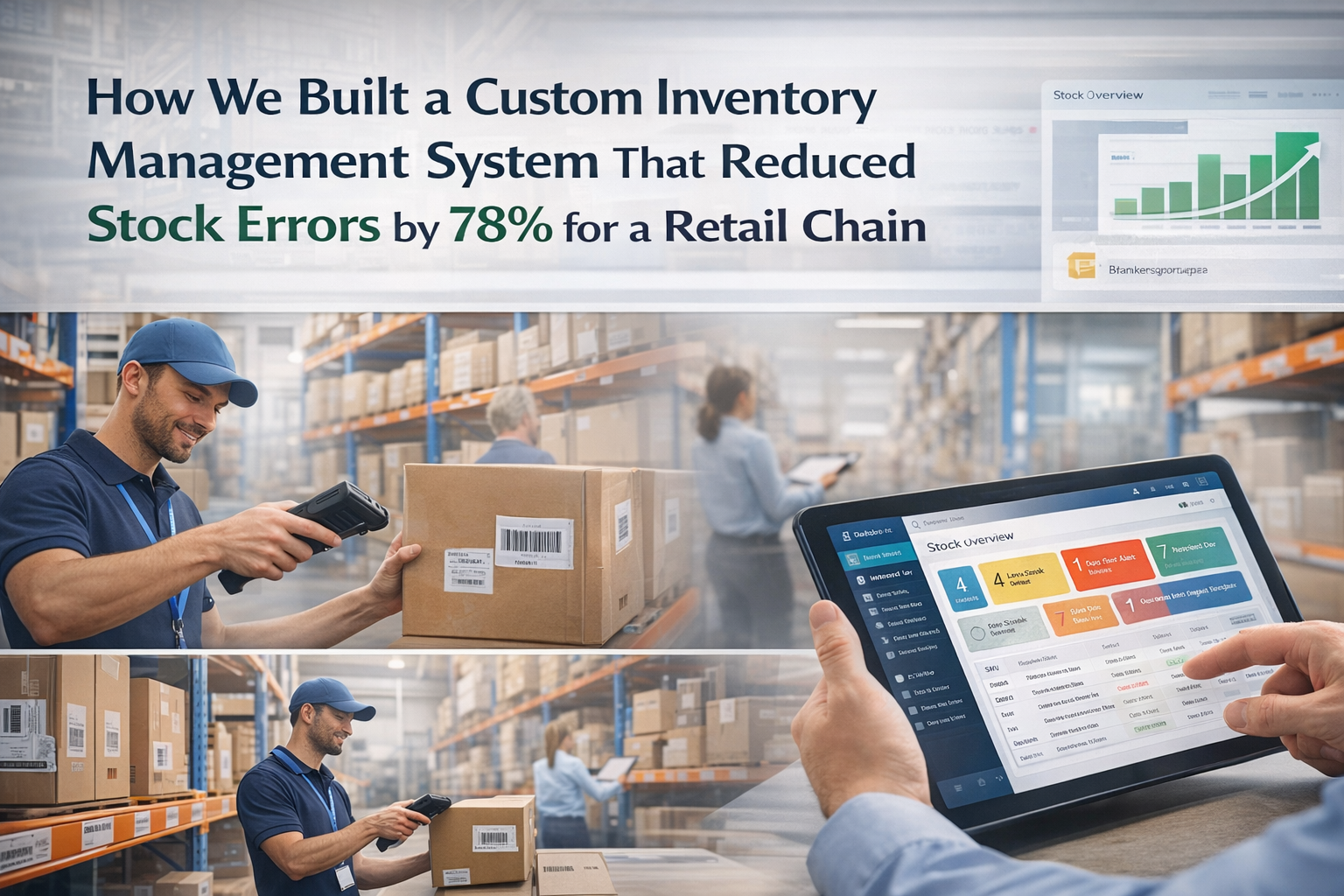
To reduce manual errors, we implemented barcode scanning and SKU-based tracking.
Store employees can quickly scan products using handheld scanners or mobile devices to update stock levels instantly.
Automated Stock Alerts
The system automatically sends alerts when inventory levels fall below predefined thresholds.
This helps managers reorder products before stockouts occur, ensuring continuous product availability.
Multi-Location Inventory Management
Retail managers can monitor inventory across multiple stores and warehouses through a centralized dashboard.
The platform provides insights such as:
• stock availability by location
• product demand trends
• slow-moving inventory
Analytics and Reporting
The system includes powerful analytics tools that help the business make data-driven decisions.
Reports include:
• sales trends
• product demand forecasting
• stock movement reports
• inventory turnover analysis
Technology Stack
To ensure scalability and reliability, we built the system using modern technologies:
Frontend
React-based dashboard for inventory management.
Backend
Python-powered APIs handling inventory logic and integrations.
Database
PostgreSQL database for secure and scalable data storage.
Infrastructure
Cloud deployment enabling real-time synchronization across multiple retail locations.
Implementation Process
The project followed an agile development approach.
- Requirement analysis and workflow mapping
- UI/UX design for warehouse and store staff
- Backend system architecture design
- API development and integration
- Testing and deployment across retail locations
This phased approach ensured minimal disruption to the retailer’s daily operations.
Results
After implementing the custom inventory management system, the retail chain experienced significant improvements.
Key results included:
• 78% reduction in stock discrepancies
• improved inventory visibility across all stores
• faster stock audits and reporting
• reduced operational overhead
• improved product availability for customers
The automation and centralized inventory management allowed the retailer to scale operations more efficiently while maintaining accurate stock data.
Business Impact
Beyond reducing stock errors, the system provided long-term strategic benefits:
• improved decision-making through real-time analytics
• optimized supply chain management
• reduced inventory holding costs
• enhanced customer satisfaction due to better product availability
The retailer now uses the system as a core operational platform across all its locations.
Conclusion
Custom software solutions can transform operational efficiency for retail businesses. By designing a system tailored to the retailer’s workflows and challenges, we were able to significantly reduce stock errors and improve inventory management across multiple locations.
This case study demonstrates how custom inventory management software can help retail companies improve accuracy, automate processes, and scale their operations effectively.
FAQs
What is a custom inventory management system?
A custom inventory management system is software designed specifically for a business to track, manage, and optimize inventory across warehouses, stores, and supply chains.
How does inventory software reduce stock errors?
Inventory systems automate stock tracking, update inventory in real time, and eliminate manual data entry, significantly reducing human errors.
Why do retail chains need inventory management software?
Retail chains require inventory systems to track stock across multiple locations, improve supply chain efficiency, and ensure product availability.
How long does it take to build a custom inventory management system?
Depending on features and integrations, development typically takes 3 to 6 months for a full-scale retail inventory platform.