Software-as-a-Service (SaaS) products have transformed how businesses deliver software. Instead of installing software on individual machines, users can access powerful applications directly through the cloud. Companies like project management platforms, CRM systems, accounting tools, and marketing automation tools all rely on the SaaS model.
However, building a successful SaaS platform requires much more than just creating a web application. A well-designed SaaS product must include essential features that ensure security, scalability, user management, performance, and seamless integrations.
Without these core components, SaaS products often struggle with user retention, operational challenges, and system instability.
In this guide, we will explore the key features every SaaS product should have to succeed in today’s competitive software market.
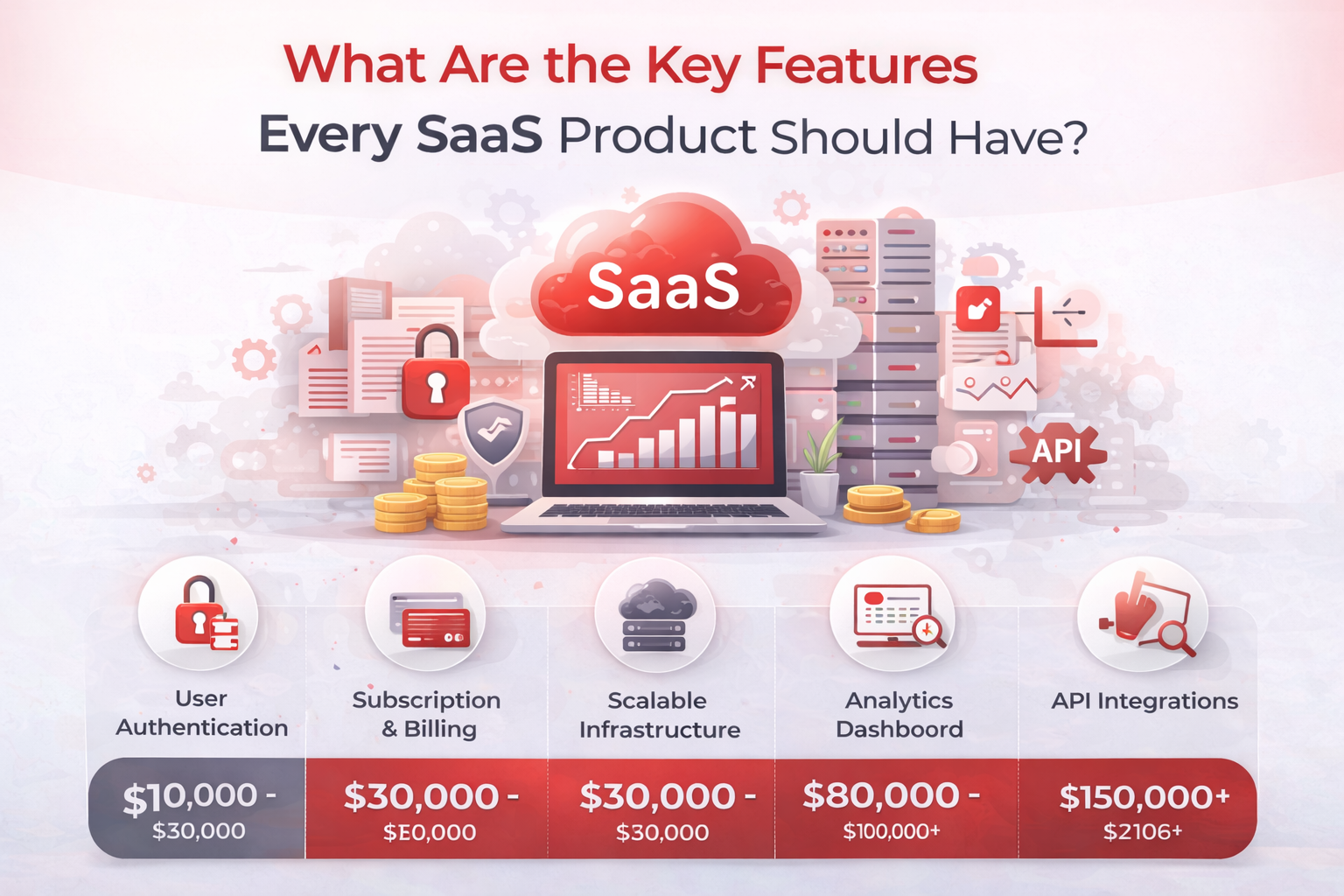
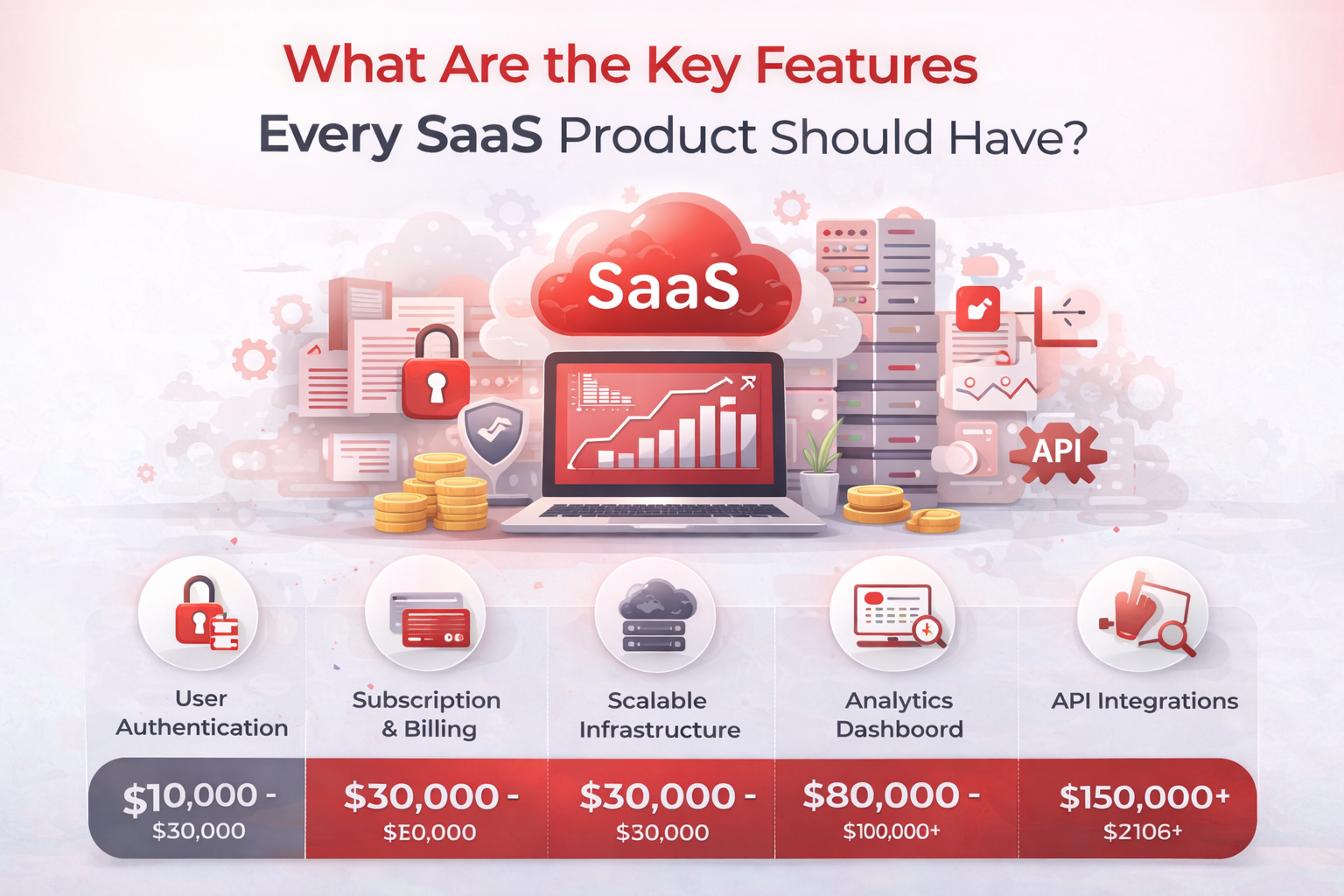
1 User Authentication and Access Control
User authentication is the foundation of any SaaS platform. It ensures that only authorized users can access the system.
Common authentication features include:
- Secure login and registration
- Password encryption
- Multi-factor authentication
- Social login options
- Session management
Access control systems also allow administrators to manage permissions for different users. For example, managers may have more privileges than standard users.
A strong authentication system protects user data and improves platform security.
2 Multi-Tenant Architecture
Most SaaS products operate using a multi-tenant architecture.
In this architecture:
- A single application serves multiple customers
- Each customer’s data is isolated and secure
- Resources are shared efficiently
This model allows SaaS companies to scale quickly while reducing infrastructure costs.
Multi-tenancy also simplifies updates because developers can deploy changes across all customers simultaneously.
3 Subscription and Billing Management
Since SaaS businesses rely on recurring revenue, a robust billing system is essential.
Important billing features include:
- Subscription plans
- recurring payments
- payment gateway integration
- invoicing
- usage-based billing
- free trial management
Many SaaS companies also offer tiered pricing models to accommodate different types of users.
Automated billing reduces manual work and ensures consistent revenue streams.
4 Scalable Cloud Infrastructure
SaaS platforms must be able to handle increasing numbers of users without performance issues.
Scalable infrastructure allows applications to grow smoothly as demand increases.
Cloud platforms such as AWS, Google Cloud, and Azure help SaaS products scale by providing:
- flexible computing resources
- load balancing
- database scaling
- automated backups
A scalable architecture prevents downtime and ensures reliable service.
5 Analytics and Reporting Dashboard
Data is one of the most valuable assets for SaaS companies.
Analytics dashboards allow businesses to track:
- user activity
- feature usage
- customer engagement
- revenue metrics
- system performance
These insights help companies improve their products and make better business decisions.
Users also benefit from analytics features because they can monitor their own performance and progress within the platform.
6 API and Third-Party Integrations
Modern SaaS products rarely operate in isolation. They must integrate with other tools used by customers.
Common integrations include:
- payment gateways
- CRM platforms
- marketing automation tools
- accounting software
- communication platforms
APIs allow SaaS platforms to connect seamlessly with other services.
This flexibility increases the value of the product and improves user experience.
7 Data Security and Compliance
Security is one of the most critical aspects of SaaS platforms.
SaaS companies must implement strong security measures such as:
- data encryption
- secure authentication
- firewall protection
- vulnerability monitoring
- regular security audits
Depending on the industry, SaaS platforms may also need to comply with regulations such as:
- GDPR
- HIPAA
- SOC 2
Strong security practices build trust with customers and protect sensitive information.
8 Role-Based User Permissions
SaaS platforms often serve organizations with multiple users.
Role-based permissions allow administrators to assign different access levels.
For example:
- administrators can manage settings
- managers can view reports
- employees can perform operational tasks
This feature helps organizations control data access and maintain operational security.
9 Customer Support and Help Center
A successful SaaS platform should always provide support options for users.
Support features may include:
- knowledge base
- help documentation
- live chat
- ticketing system
- onboarding tutorials
Effective customer support improves user satisfaction and reduces churn.
10 Performance Monitoring
Performance monitoring tools track system health and application performance.
Key monitoring capabilities include:
- server performance tracking
- error logging
- uptime monitoring
- usage analytics
Monitoring systems help developers identify and fix problems quickly before they affect users.
Advanced Features That Improve SaaS Products
Beyond core features, advanced capabilities can significantly enhance SaaS platforms.
These may include:
- AI-powered recommendations
- workflow automation
- advanced reporting tools
- mobile applications
- customizable dashboards
Such features provide additional value and help SaaS products stand out in competitive markets.
Common SaaS Development Mistakes
Many SaaS products fail because of poor planning or missing core functionality.
Common mistakes include:
- ignoring scalability
- weak security architecture
- poor user experience
- lack of integrations
- complicated onboarding process
Avoiding these issues improves product reliability and long-term success.
Conclusion
Building a successful SaaS platform requires more than just writing code. A strong SaaS product must include essential features such as authentication, scalable infrastructure, subscription billing, analytics, integrations, and robust security.
These components ensure that the platform can support growing user bases, protect data, and deliver a seamless user experience.
Companies that invest in the right architecture and feature set are far more likely to build SaaS products that scale successfully and retain customers over the long term.
FAQs
What are the most important features of a SaaS product?
The most important SaaS features include user authentication, subscription billing, cloud scalability, analytics dashboards, API integrations, and strong security systems.
Why is scalability important in SaaS applications?
Scalability ensures that the platform can handle increasing users and workloads without affecting performance.
What architecture do most SaaS products use?
Most SaaS platforms use multi-tenant cloud architecture, which allows multiple customers to share the same infrastructure securely.
Do SaaS platforms need integrations?
Yes. Integrations with tools like CRM systems, payment gateways, and marketing platforms significantly increase the value of a SaaS product.