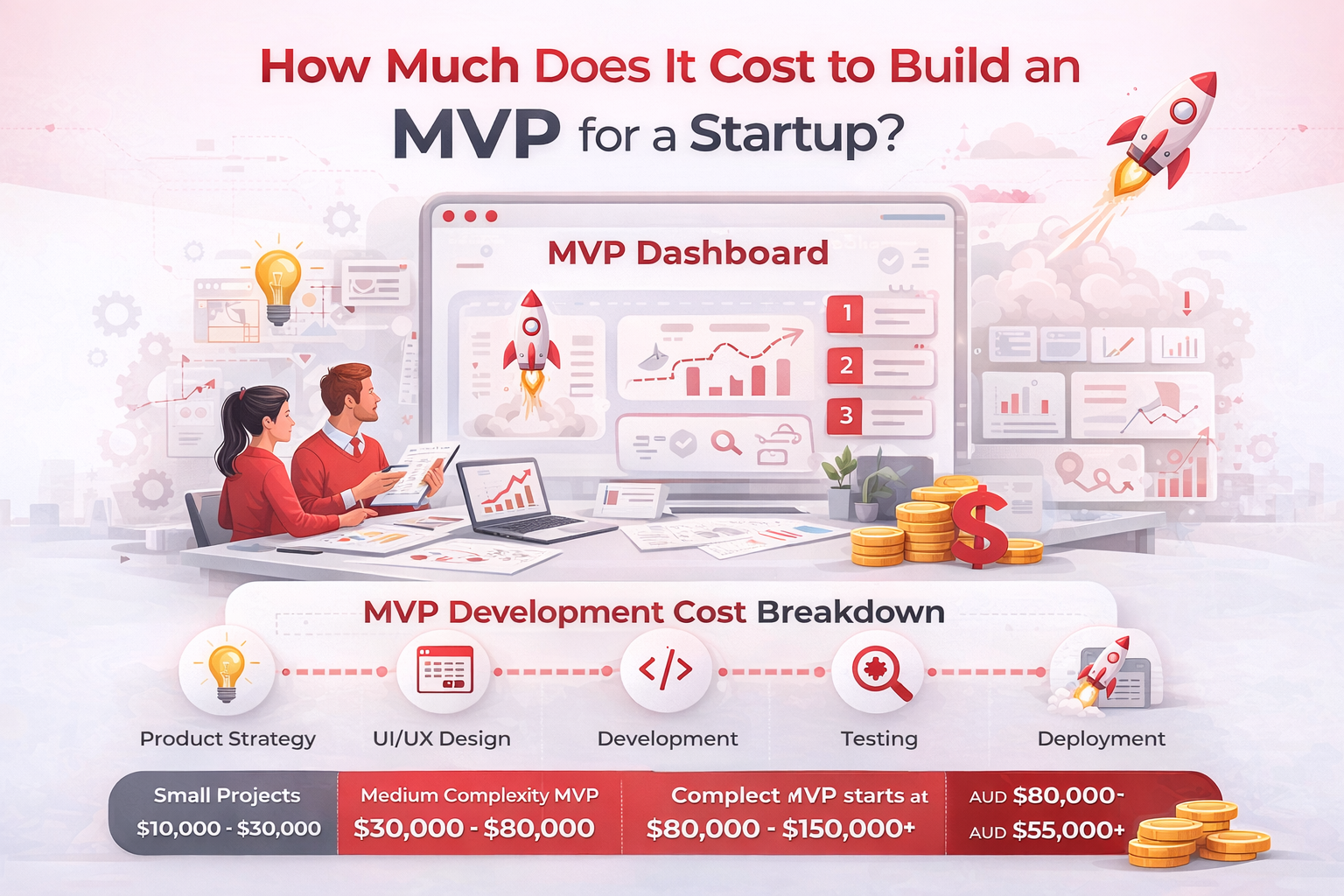
For most startups, the first major technical milestone is building an MVP (Minimum Viable Product). An MVP is the earliest version of a product that includes only the core features necessary to validate an idea with real users.
Instead of spending years and large budgets building a complete product, startups use MVPs to:
- Test market demand
- Attract early users
- Secure investor funding
- Collect feedback
- Improve the product based on real usage
However, one of the biggest questions founders ask is:
“How much does it cost to build an MVP?”
The cost varies depending on product complexity, features, and development team location. In this guide, we’ll break down the real MVP development costs in 2026 and what startups actually pay for.
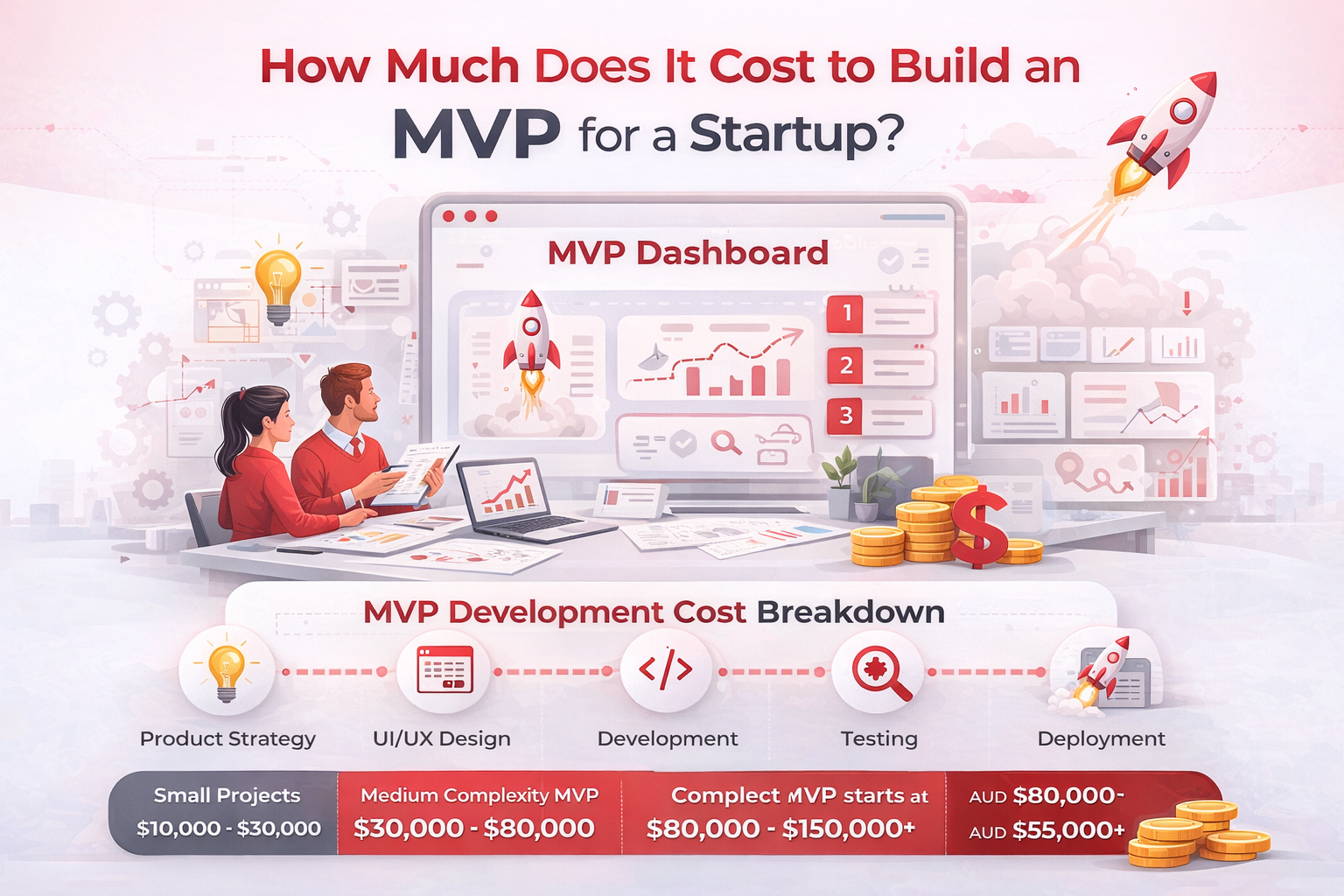
Average Cost to Build an MVP in 2026
Here are typical price ranges for startup MVP development.
Simple MVP
Examples:
- Basic web app
- Landing page + user dashboard
- Simple marketplace
Estimated cost:
$10,000 – $30,000
Medium Complexity MVP
Examples:
- SaaS platforms
- booking platforms
- analytics dashboards
- subscription-based products
Estimated cost:
$30,000 – $80,000
Complex MVP
Examples:
- AI platforms
- fintech applications
- multi-platform systems
- advanced marketplaces
Estimated cost:
$80,000 – $150,000+
What Determines MVP Development Cost
Several factors influence the total cost.
1 Product Complexity
More complex platforms require:
- advanced backend architecture
- integrations
- scalable infrastructure
Simple tools cost far less than complex platforms.
2 Number of Features
The biggest mistake startups make is building too many features in the first version.
A true MVP focuses only on core functionality.
Example:
Instead of building:
- messaging
- analytics
- payment system
- admin dashboard
- AI features
Start with just the core feature solving the main problem.
3 Platform Type
The platform you choose affects development cost.
Web Application
Lowest cost option for MVPs.
Mobile App
Higher cost because separate builds may be required.
Web + Mobile
Most expensive MVP option.
Many startups launch with web first, then expand to mobile.
4 UI and UX Design
Good user experience increases adoption.
Design includes:
- wireframes
- product flows
- UI components
- responsive layouts
Design usually accounts for 10–20% of development cost.
5 Development Team Location
Development rates vary worldwide.
Typical hourly rates in 2026:
North America
$120 – $200/hour
Australia
$100 – $180/hour
Europe
$60 – $120/hour
Asia
$30 – $80/hour
Choosing the right team significantly affects budget.
MVP Development Cost Breakdown
A typical MVP budget is divided into several stages.
Product Strategy
Market research and product planning.
Estimated cost:
5–10%
UI/UX Design
Designing the user interface and flows.
Estimated cost:
10–20%
Development
Frontend + backend engineering.
Estimated cost:
50–60%
Testing
Ensuring product stability and reliability.
Estimated cost:
10–15%
Deployment
Launching the application and server setup.
Estimated cost:
5–10%
How Long Does It Take to Build an MVP?
Typical MVP development timeline:
Simple MVP
4–8 weeks
Medium MVP
2–4 months
Complex MVP
4–6 months
Speed depends on team size, feature scope, and product complexity.
Technologies Commonly Used for MVPs
Modern startups often use scalable technologies.
Frontend:
- React
- Next.js
Backend:
- Node.js
- Python
- Go
Database:
- PostgreSQL
- MongoDB
Infrastructure:
- AWS
- Google Cloud
Using scalable technologies helps startups grow without rebuilding the product.
How Startups Can Reduce MVP Costs
Build Only the Core Feature
Focus on solving one main problem.
Use Existing APIs
Instead of building everything from scratch, use:
- payment APIs
- authentication services
- analytics tools
Use Cross Platform Development
Technologies like React Native allow building mobile apps for both platforms with one codebase.
Work With an Experienced Development Team
Skilled teams can deliver an MVP faster and avoid costly mistakes.
Why MVPs Are Important for Startup Funding
Investors rarely fund startups with only an idea.
They look for:
- working product
- real users
- early traction
An MVP demonstrates that the idea is technically feasible and market validated.
Many startups raise their first investment round after launching an MVP.
Common MVP Mistakes Startups Make
Building Too Many Features
Focus on the core product value.
Ignoring User Feedback
Early users provide insights that shape the product.
Poor Scalability
The MVP should still support future growth.
Skipping Product Validation
Market validation is the purpose of an MVP.
Benefits of Building an MVP
Startups gain several advantages.
- lower development costs
- faster launch
- real user feedback
- reduced product risk
- easier investor pitching
MVP development allows startups to test ideas before making large investments.
Conclusion
Building an MVP is one of the smartest strategies for startups in 2026.
Instead of investing hundreds of thousands of dollars in a full product, founders can launch a simplified version quickly and validate the concept.
Most MVPs cost between $10,000 and $80,000, depending on complexity and features.
The key is to focus on core functionality, fast development, and user feedback.
Startups that successfully launch MVPs often gain early traction, attract investors, and build scalable products faster.
FAQs
What does MVP mean in startups?
MVP stands for Minimum Viable Product, which is the first functional version of a product built with only essential features.
How long does it take to build an MVP?
Most MVPs take 1–4 months depending on complexity.
Can a startup build an MVP for under $10,000?
Yes, very simple MVPs can be built within this budget, especially using no-code or small development teams.
Should startups build mobile or web MVP first?
Most startups launch with web MVPs first, then expand to mobile apps after validation.
Do investors require an MVP?
Not always, but having an MVP significantly improves the chances of raising funding.