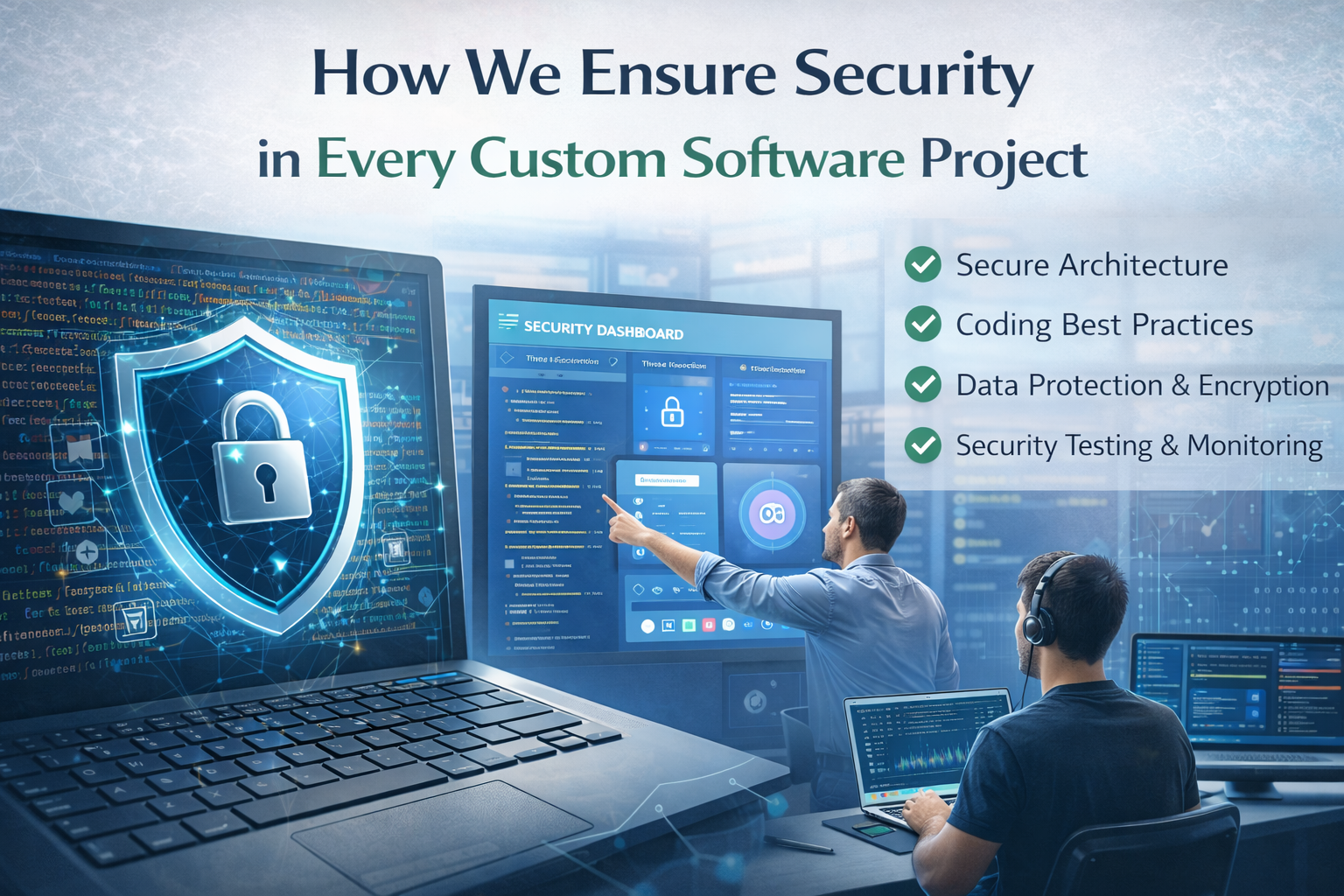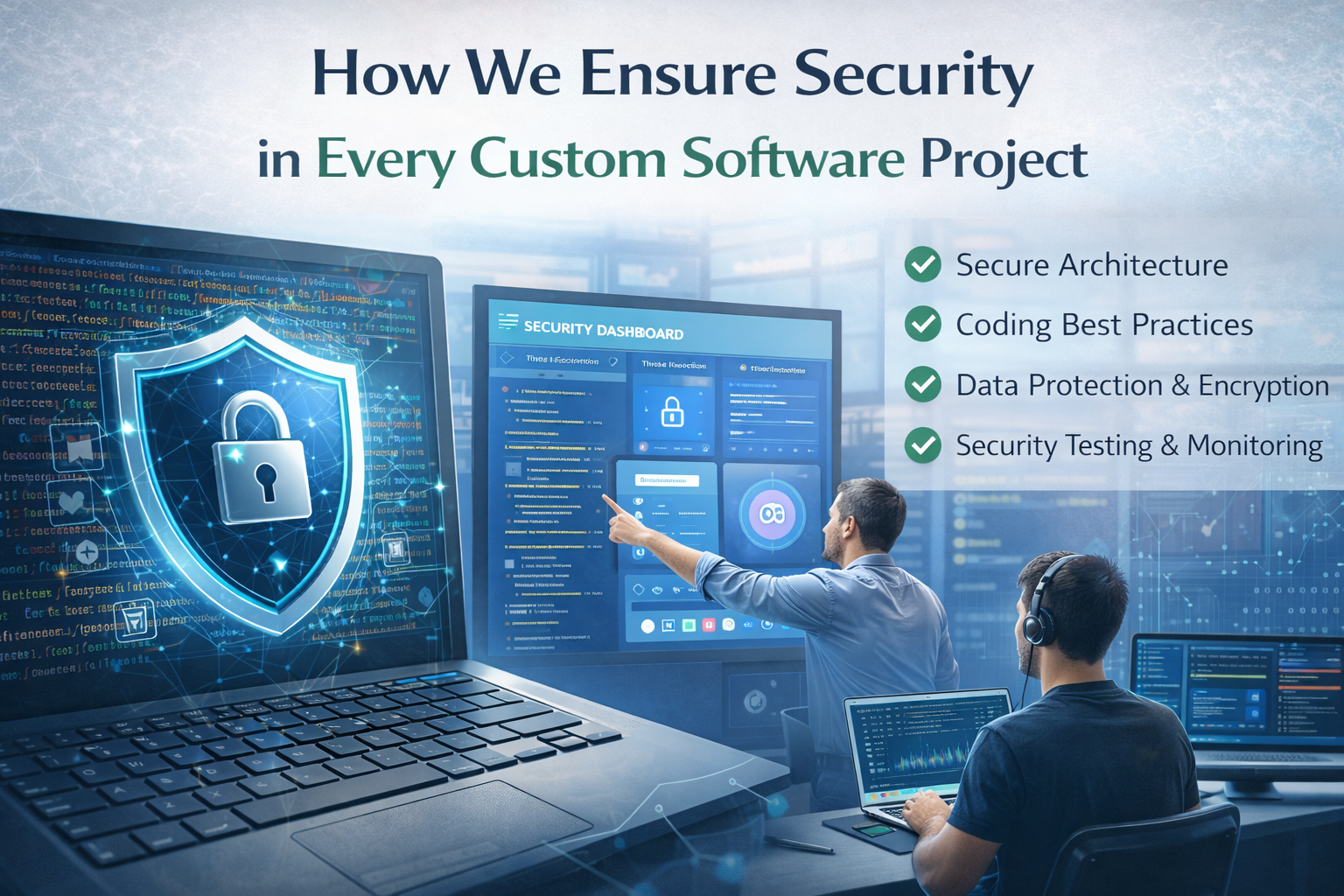
How We Ensure Security in Every Custom Software Project
In today's digital landscape, security is one of the most critical aspects of software development. Businesses rely on custom software to manage sensitive data, automate operations, and serve customers online. Without strong security practices, software systems can become vulnerable to cyberattacks, data breaches, and operational disruptions.
Ensuring security in custom software development requires more than adding security features at the end of a project. It involves integrating security practices throughout the entire development lifecycle—from planning and architecture design to testing and deployment.
In this article, we explore how we ensure security in every custom software project and the key practices that help protect businesses from modern cybersecurity threats.
Why Security Matters in Custom Software Development
Custom software often handles sensitive information such as customer data, financial transactions, operational records, and proprietary business data.
If security vulnerabilities exist, organizations may face serious consequences, including:
• data breaches and information theft
• financial losses and fraud
• reputational damage
• regulatory penalties
• service disruptions
Implementing strong security practices during development ensures that software systems remain reliable, secure, and compliant with industry standards.
Security-First Development Approach
Security should never be treated as an afterthought. Instead, it must be embedded into every stage of software development.
Our development process follows a security-first approach, which means security considerations are included from the earliest planning phases to final deployment.
This proactive approach helps identify and mitigate risks before they become critical vulnerabilities.
Secure Software Architecture
Security begins with designing a strong system architecture.
During the architecture phase, developers define how data flows through the system, how services communicate, and how sensitive information is stored and protected.
Key architecture principles include:
• secure authentication and authorization systems
• encrypted communication between services
• role-based access control
• secure API design
• separation of system components
A well-designed architecture significantly reduces the risk of security vulnerabilities.
Secure Coding Practices
Secure coding practices help prevent common software vulnerabilities.
Developers follow strict guidelines to ensure that code remains safe and reliable.
These practices include:
• validating all user inputs
• preventing SQL injection attacks
• protecting against cross-site scripting (XSS)
• avoiding insecure dependencies
• implementing proper error handling
By following secure coding standards, development teams reduce the likelihood of introducing vulnerabilities into the system.
Data Encryption and Protection
Protecting sensitive data is one of the most important aspects of software security.
Custom software systems must ensure that data remains secure both during transmission and while stored in databases.
Common data protection practices include:
• encryption of sensitive data
• secure communication protocols such as HTTPS
• token-based authentication systems
• secure password hashing
These techniques help prevent unauthorized access to critical information.
Regular Security Testing
Security testing is essential to identify vulnerabilities before software reaches production.
Different types of security testing include:
• vulnerability scanning
• penetration testing
• security code reviews
• dependency security checks
Regular testing ensures that security issues are detected and fixed early in the development process.
Access Control and Authentication
Proper access management is essential to protect sensitive systems and data.
Modern software applications use advanced authentication methods such as:
• multi-factor authentication
• role-based access control
• secure session management
These mechanisms ensure that only authorized users can access sensitive features and data.
Continuous Monitoring and Updates
Cybersecurity threats constantly evolve, making continuous monitoring essential.
After deployment, software systems must be regularly monitored and updated to maintain security.
This includes:
• applying security patches
• monitoring system logs
• updating dependencies
• detecting suspicious activity
Continuous monitoring helps organizations stay ahead of emerging threats.
Compliance and Security Standards
Many industries require compliance with strict security standards.
Depending on the industry, software systems may need to comply with regulations such as:
• GDPR for data protection
• HIPAA for healthcare systems
• PCI DSS for payment processing
Following industry standards ensures that software meets legal and security requirements.
The Role of Security in Long-Term Software Success
Security is not just a technical requirement—it is a critical component of long-term software success.
Secure software systems provide several benefits:
• increased user trust
• protection of sensitive data
• reduced risk of cyberattacks
• improved business reputation
• long-term system reliability
Organizations that prioritize security from the beginning build stronger, more resilient digital platforms.
Conclusion
Security plays a vital role in every custom software project. By integrating secure architecture, coding standards, testing practices, and continuous monitoring, businesses can significantly reduce the risk of cyber threats.
A proactive security approach ensures that custom software systems remain reliable, scalable, and protected against evolving cybersecurity challenges.
Building secure software is not just about protecting systems—it is about safeguarding businesses, users, and valuable data.
FAQs
Why is security important in custom software development?
Security protects sensitive business data, prevents cyberattacks, and ensures that software systems remain reliable and trustworthy.
What is secure software development lifecycle (SSDLC)?
The secure software development lifecycle integrates security practices into every phase of development, including design, coding, testing, and deployment.
How do developers prevent security vulnerabilities?
Developers follow secure coding practices, conduct security testing, validate inputs, encrypt sensitive data, and continuously monitor systems.
What are the most common software security risks?
Common risks include SQL injection attacks, cross-site scripting (XSS), insecure APIs, weak authentication systems, and outdated dependencies.