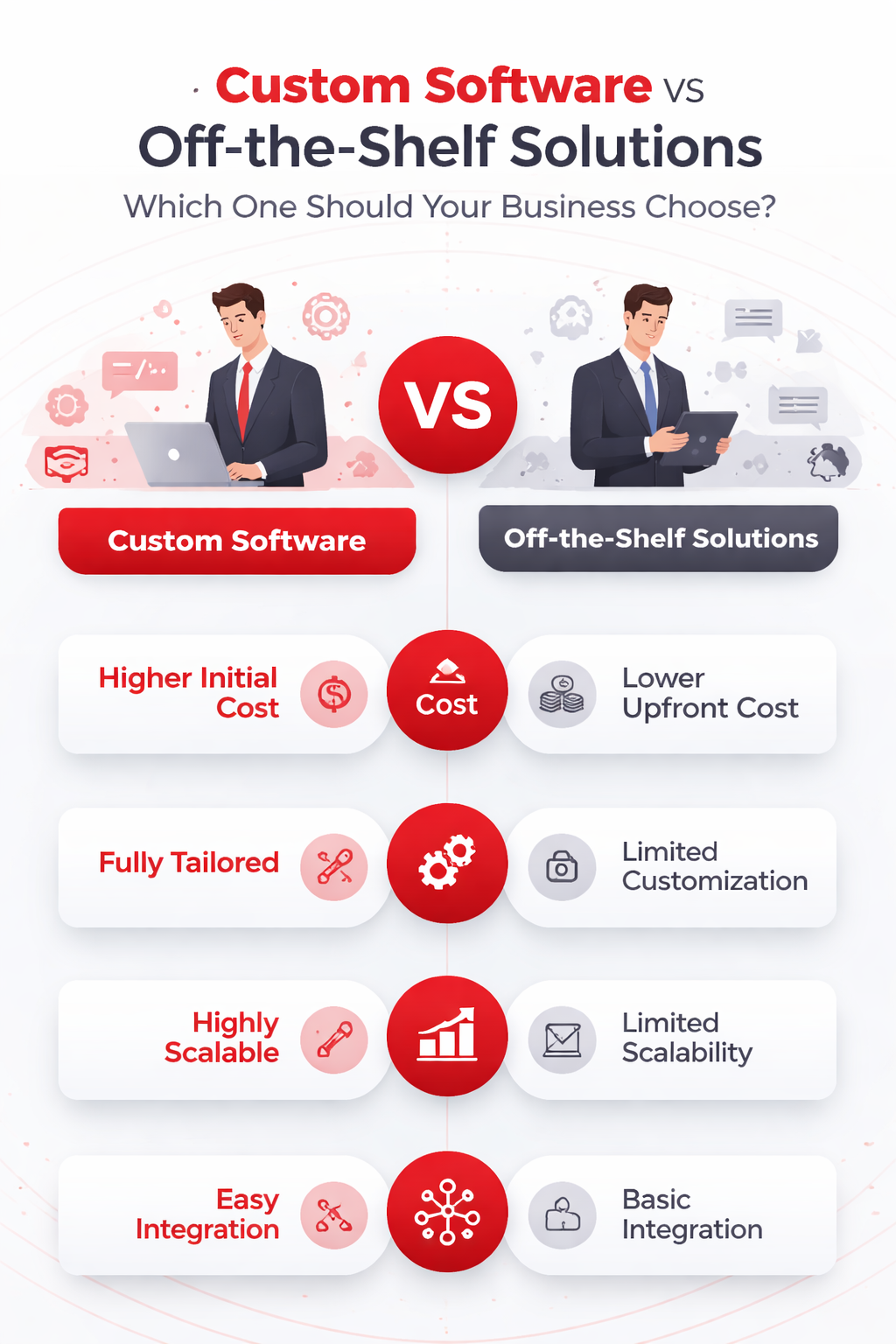
In today’s rapidly evolving digital economy businesses depend heavily on software to manage operations improve efficiency and deliver better customer experiences. Whether it is managing inventory automating marketing handling finances or building customer portals software has become the backbone of modern organizations.
However when businesses decide to implement a digital solution they often face a critical question
Should we use off-the-shelf software or invest in custom software development
This decision is more important than ever in 2026 where technologies like artificial intelligence automation cloud computing and data analytics are transforming how companies operate.
Off-the-shelf solutions promise quick deployment and lower upfront cost while custom software offers flexibility scalability and competitive advantage.
But which one is truly right for your business
In this guide we will deeply explore both options compare their advantages disadvantages and help you determine the best approach for your organization.
Understanding Custom Software
What is Custom Software
Custom software refers to applications that are designed and developed specifically for a particular organization or business requirement.
Instead of adapting your workflow to fit a generic tool custom software is built around your exact processes goals and operational needs.
For example a logistics company might need a custom platform that integrates
fleet management
real time delivery tracking
driver scheduling
fuel analytics
route optimization
Off-the-shelf tools may provide some of these features but rarely all of them together in the exact way the business needs.
Custom development allows businesses to create a fully tailored solution.
Key Characteristics of Custom Software
Built for specific business workflows
Custom software follows the company’s operational structure rather than forcing employees to adapt to rigid tools.
Highly scalable
As the business grows the software can easily evolve with new features integrations and capabilities.
Unique competitive advantage
Custom systems are not available to competitors which can create differentiation in the market.
Integration flexibility
Custom software can integrate with existing tools databases APIs and business systems.
Full ownership
The company owns the software architecture code and infrastructure.
Example of Custom Software
Examples of custom software solutions include
Hospital management systems
Enterprise resource planning platforms
Custom CRM systems
Industry specific booking systems
AI powered analytics platforms
Inventory and warehouse automation systems
These solutions are often designed to match very specific operational requirements.
Understanding Off-the-Shelf Software
What is Off-the-Shelf Software
Off-the-shelf software refers to pre built applications designed for mass use by multiple businesses or individuals.
These products are developed to solve common problems faced by many organizations.
Examples include
accounting software
project management tools
CRM platforms
email marketing tools
website builders
Companies purchase a license or subscription and start using the product immediately.
Key Characteristics of Off-the-Shelf Software
Ready to use
These solutions can be implemented quickly without development time.
Lower upfront cost
Most off-the-shelf tools operate on subscription based pricing.
Standard features
They offer predefined features designed to meet common business needs.
Vendor support
The software provider maintains updates security patches and technical support.
Examples of Off-the-Shelf Software
Examples of widely used off-the-shelf solutions include
project management platforms
accounting tools
customer relationship management systems
email automation software
HR management platforms
These products are popular because they allow businesses to quickly adopt technology without building systems from scratch.
Custom Software vs Off-the-Shelf Software
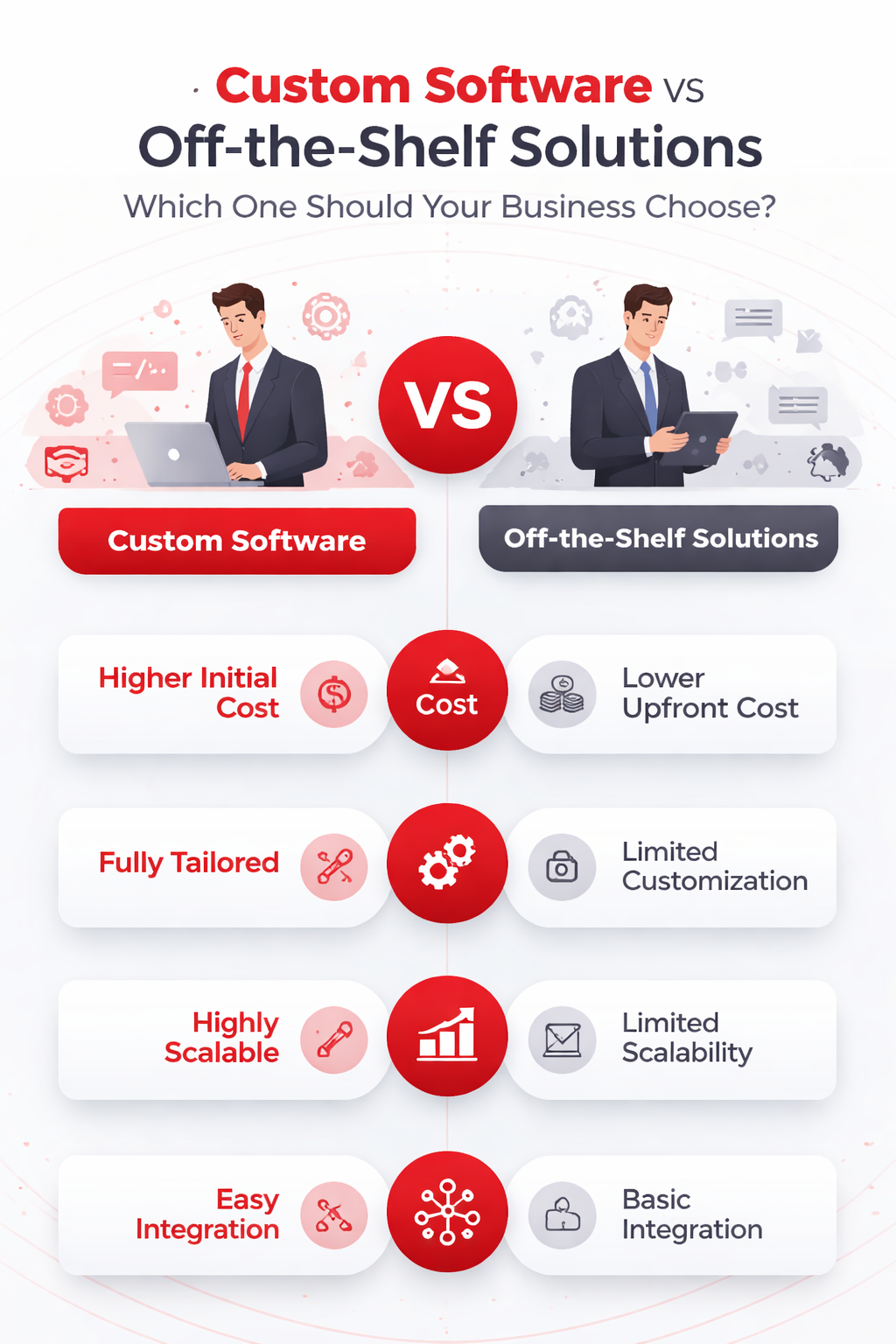
To choose the right solution businesses must compare several critical factors.
1 Cost Comparison
Off-the-Shelf Software Cost
Initially off-the-shelf software appears cheaper because businesses only pay subscription fees.
However costs can accumulate through
monthly subscriptions
user licenses
feature upgrades
integration fees
data storage charges
Over several years the total cost can become significant.
Custom Software Cost
Custom development requires higher initial investment because the solution must be designed and built.
However long term costs may be lower because
no recurring license fees
no per user charges
ownership of the system
control over hosting and infrastructure
For growing companies custom software often becomes more cost efficient over time.
2 Flexibility
Off-the-Shelf Software
These tools offer limited customization. Businesses must adapt their processes to match the software’s capabilities.
If certain features are missing companies may need multiple tools to cover different tasks.
Custom Software
Custom solutions provide maximum flexibility.
Businesses can design
unique workflows
custom dashboards
specific reporting systems
automation processes
Every feature is tailored to operational requirements.
3 Scalability
Off-the-Shelf Software
Most pre built tools are designed for a broad audience. While they can scale to some extent they may struggle when businesses require specialized workflows or large data processing.
Organizations sometimes outgrow these tools.
Custom Software
Custom solutions are designed with future growth in mind.
New modules features integrations and automation can be added whenever necessary.
This makes custom software ideal for
fast growing startups
enterprise organizations
companies with evolving requirements.
4 Integration Capabilities
Modern businesses rely on multiple digital tools.
These may include
CRM systems
payment gateways
inventory platforms
analytics tools
mobile apps
Off-the-Shelf Software Integration
Some tools provide APIs but integration options can still be limited.
Businesses may face compatibility issues or require third party middleware.
Custom Software Integration
Custom systems can integrate seamlessly with
existing internal systems
external APIs
cloud infrastructure
mobile platforms
AI tools and automation systems.
5 Security and Data Control
Security has become a major concern in modern digital systems.
Off-the-Shelf Software Security
Because these tools are used by many companies they are frequent targets for cyber attacks.
Businesses must rely on the vendor’s security policies and infrastructure.
Custom Software Security
Custom platforms allow companies to implement
advanced encryption
custom authentication methods
industry specific compliance measures
secure data storage architecture.
This provides greater control over sensitive data.
6 Competitive Advantage
Off-the-shelf software is accessible to anyone including competitors.
Custom software on the other hand enables companies to build unique digital capabilities.
Examples include
AI driven customer insights
automated business workflows
custom analytics dashboards
industry specific platforms.
These tools can significantly improve efficiency and differentiation.
When Should Businesses Choose Off-the-Shelf Software
Off-the-shelf solutions are ideal when
business needs are simple
budget is limited
speed of implementation is important
no unique workflows are required
the company is still testing new processes.
Startups often begin with pre built tools before transitioning to custom solutions as they scale.
When Should Businesses Choose Custom Software
Custom software becomes the better option when
business processes are complex
existing tools do not meet requirements
integration with multiple systems is necessary
data control is critical
automation is required
the company wants long term competitive advantage.
Industries like healthcare logistics manufacturing and fintech often rely heavily on custom platforms.
The Rise of AI Powered Custom Software in 2026
One of the biggest shifts in modern software development is the integration of artificial intelligence and automation.
Businesses are increasingly adopting custom solutions that include
AI powered data analysis
predictive insights
automated decision systems
intelligent customer support
workflow automation.
These capabilities are difficult to implement using generic off-the-shelf platforms.
Custom software allows organizations to fully leverage AI for operational efficiency and growth.
Hybrid Approach: Combining Both Solutions
Many businesses today adopt a hybrid strategy.
They use off-the-shelf tools for general tasks such as
email communication
document management
team collaboration.
At the same time they invest in custom software for critical operations like
core business workflows
data analytics
automation systems
customer experience platforms.
This approach balances cost efficiency with flexibility.
How to Decide What Your Business Needs
When choosing between custom and off-the-shelf software businesses should evaluate
business size
long term growth plans
workflow complexity
integration requirements
budget constraints
data security needs.
A detailed technology assessment can help identify the best strategy.
Final Thoughts
Both custom software and off-the-shelf solutions offer valuable benefits but the right choice depends entirely on your business goals and operational complexity.
Off-the-shelf software provides quick and affordable implementation for standard needs.
Custom software offers flexibility scalability and long term competitive advantage.
As digital transformation accelerates in 2026 more companies are investing in tailored platforms that help them automate operations improve decision making and create better customer experiences.
Need Custom Software for Your Business
If your company requires software that perfectly matches your workflows automation needs and growth strategy investing in custom development can unlock significant long term value.
At Aronexs we help businesses build
custom web platforms
mobile applications
AI powered systems
startup MVPs
business automation tools.
Our team designs scalable solutions tailored to your exact requirements helping you stay ahead in the competitive digital landscape.
If you are planning to build a custom platform for your business this could be the right time to transform your ideas into powerful software.