Businesses across Australia are rapidly investing in digital transformation. From startups in Sydney to manufacturing companies in Melbourne and logistics firms in Brisbane, organizations are building custom software to automate operations, improve customer experience, and scale efficiently.
However, one of the most common questions companies ask before starting a project is:
“How much does custom software development actually cost?”
In 2026, the answer is not a simple fixed number. The cost of custom software development depends on several factors including project complexity, technology stack, team expertise, infrastructure, and ongoing maintenance.
Many businesses assume they are only paying developers to write code. In reality, they are paying for a complete process that includes strategy, design, engineering, testing, security, deployment, and long-term scalability.
In this guide, we will break down the real cost of custom software development in Australia and explain what businesses are actually paying for when they invest in a custom solution.
Why Businesses Are Investing in Custom Software
Companies in Australia are increasingly choosing custom software instead of generic tools because they need solutions tailored to their operations.
Industries driving this demand include:
- Healthcare
- Logistics
- Construction
- Fintech
- E-commerce
- Education
- Mining
- Professional services
Custom software allows businesses to:
• automate internal processes
• integrate multiple systems
• build scalable platforms
• gain data insights
• create better digital experiences for customers
As a result, demand for custom software development services in Australia continues to grow every year.
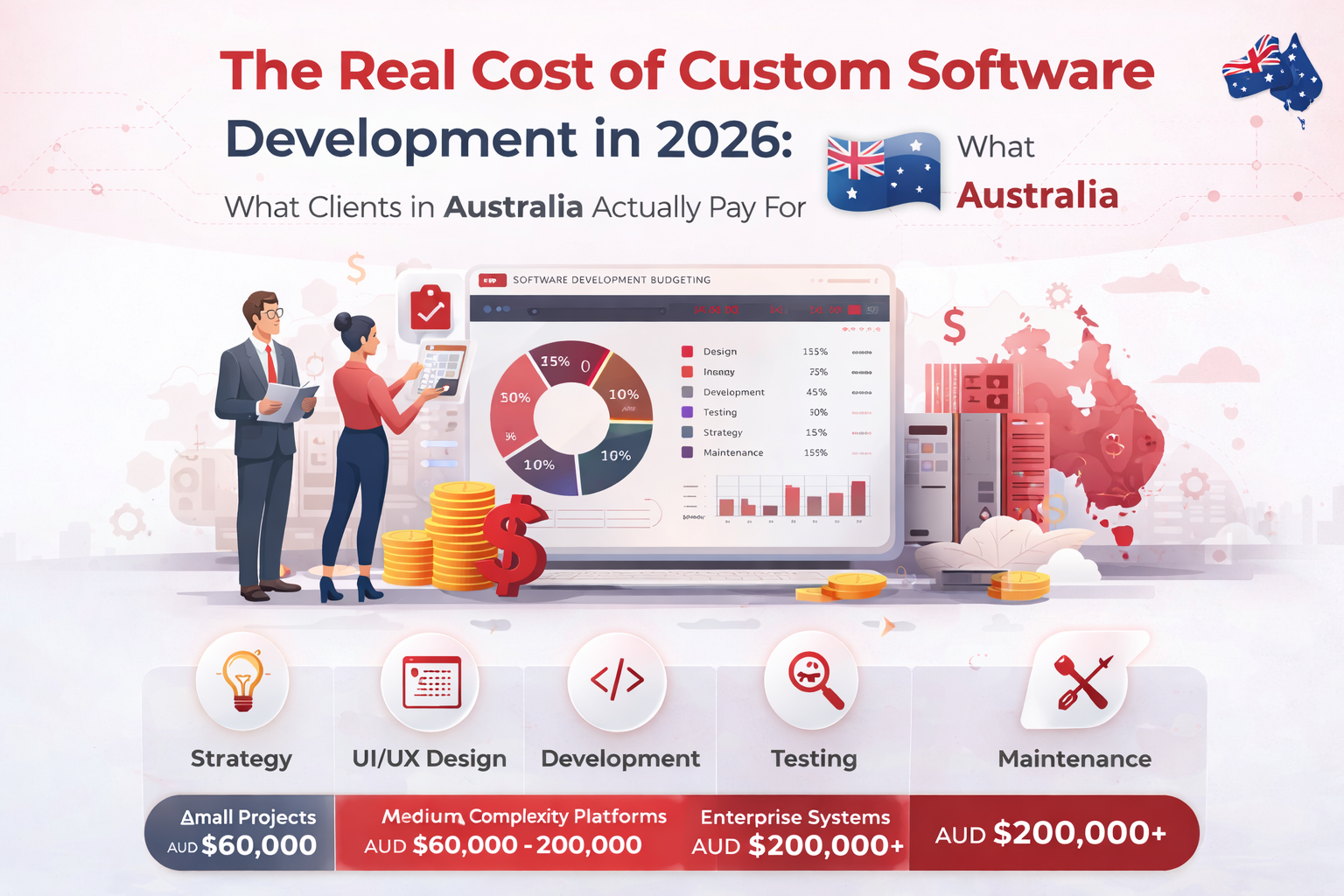
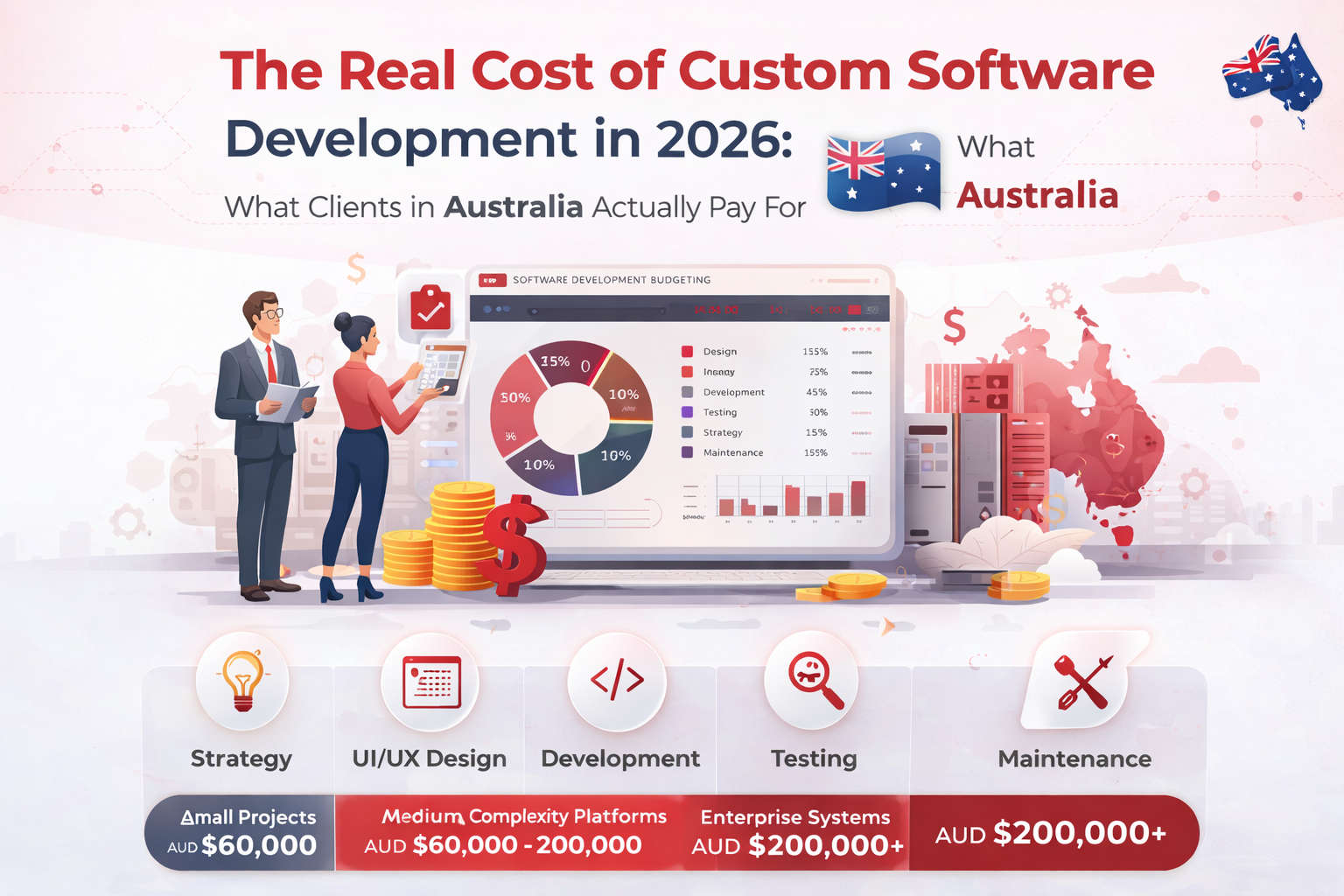
Average Custom Software Development Cost (2026)
The cost of building custom software varies widely depending on the project size.
Small Software Projects
Examples include internal dashboards or simple workflow tools.
Estimated cost:
AUD $15,000 – $60,000
Medium Complexity Platforms
Examples include booking systems, SaaS platforms, or integrated business tools.
Estimated cost:
AUD $60,000 – $200,000
Large Enterprise Systems
Examples include logistics platforms, healthcare systems, or enterprise automation software.
Estimated cost:
AUD $200,000 – $800,000+
Large platforms can exceed AUD $1 million depending on complexity and integrations.
What Clients Actually Pay For
Many people believe the cost of software development only covers coding. In reality, clients pay for a complete product development lifecycle.
Below are the major cost components.
1 Product Strategy and Planning
Before development begins, teams analyze the business requirements and define the product roadmap.
This stage includes:
• business analysis
• feature planning
• technology selection
• project architecture
• development timeline planning
This phase ensures the software is designed correctly from the start.
Typical cost allocation:
5–10 percent of the total project budget
2 UI and UX Design
User experience plays a major role in modern software.
Design teams create:
• wireframes
• user flows
• interactive prototypes
• design systems
• responsive layouts
A well-designed interface improves usability and adoption.
Typical cost allocation:
10–20 percent of the project budget
3 Software Development (Engineering)
This is the core development phase where engineers build the application.
It includes:
• frontend development
• backend architecture
• database design
• API development
• integration with external services
Development is usually the largest cost component.
Typical cost allocation:
40–55 percent of the total budget
4 Quality Assurance and Testing
Testing ensures the software works reliably across devices and scenarios.
Testing activities include:
• functional testing
• performance testing
• security testing
• usability testing
• bug fixing
Skipping this stage often results in costly problems after launch.
Typical cost allocation:
10–15 percent of the project cost
5 Infrastructure and Cloud Setup
Modern applications often run on cloud platforms.
This includes:
• server setup
• cloud architecture
• security configuration
• database hosting
• deployment pipelines
Infrastructure costs vary depending on the scale of the platform.
6 Integration with External Systems
Most modern software integrates with other tools such as:
• payment gateways
• CRM systems
• accounting platforms
• marketing tools
• analytics platforms
Each integration requires development time and technical planning.
7 Security and Compliance
Australian businesses must follow strict regulations regarding data protection.
Security measures include:
• encryption
• authentication systems
• data privacy controls
• secure APIs
• compliance frameworks
Industries such as healthcare and finance require particularly strong security.
8 Maintenance and Ongoing Support
Software development does not end after launch.
Businesses must continuously maintain their systems through:
• software updates
• performance monitoring
• security patches
• feature improvements
Many companies allocate 15–20 percent of the initial development cost annually for maintenance.
Factors That Affect Custom Software Costs
Several key factors influence the total cost.
Project Complexity
More complex platforms require more development time.
Examples of high complexity features include:
• AI integration
• advanced analytics
• real-time data processing
• machine learning systems
Number of Integrations
Connecting software with multiple services increases development effort.
Technology Stack
Different technologies require different levels of expertise.
For example:
• AI systems
• blockchain solutions
• high-performance data platforms
These technologies increase project complexity.
Team Expertise
Experienced development teams may charge higher rates but often deliver higher quality solutions.
In Australia, software developer rates can range from:
AUD $90 to $200 per hour
Why Cheap Software Development Often Becomes Expensive
Some companies choose extremely low-cost development providers.
This often results in problems such as:
• poor architecture
• security vulnerabilities
• slow performance
• difficult maintenance
• lack of scalability
Businesses often end up rebuilding the system later, which doubles the cost.
Investing in well-built software from the beginning saves significant time and money in the long term.
How Businesses Can Reduce Development Costs
Companies can reduce costs without sacrificing quality by following a few strategies.
Build an MVP First
A Minimum Viable Product focuses only on essential features.
This approach allows businesses to launch faster and improve the product based on user feedback.
Use Scalable Architecture
Designing scalable systems prevents expensive rebuilds later.
Prioritize Core Features
Avoid building unnecessary features during the initial launch.
Work With Experienced Development Teams
Skilled teams can deliver efficient architecture and reduce long-term maintenance costs.
The Long-Term Value of Custom Software
While custom software requires investment, it provides significant long-term benefits.
Companies gain:
• complete control over their technology
• improved operational efficiency
• scalable infrastructure
• competitive advantage
• better data insights
For many Australian businesses, custom software becomes a core digital asset that drives long-term growth.
Conclusion
Custom software development in 2026 is not simply about writing code. Businesses invest in a full process that includes strategy, design, engineering, testing, and long-term support.
For companies in Australia, the cost of custom software depends on factors such as complexity, integrations, and scalability requirements.
While initial investment may seem significant, well-designed software can dramatically improve operational efficiency, customer experience, and business growth.
Organizations that treat software as a strategic investment rather than an expense often gain the greatest long-term advantages.
FAQs
How much does custom software development cost in Australia?
Small projects may cost AUD $15,000 – $60,000, while complex enterprise platforms can exceed AUD $200,000 or more depending on features and integrations.
How long does custom software development take?
Typical timelines range from 3 to 9 months depending on the project scope and complexity.
Is custom software better than off-the-shelf solutions?
Custom software is ideal for businesses with unique workflows, scalability needs, or integration requirements that generic tools cannot support.
Can startups afford custom software?
Yes. Many startups begin with an MVP (Minimum Viable Product) to reduce initial development costs and scale gradually.
What industries in Australia use custom software the most?
Common industries include:
• healthcare
• logistics
• fintech
• construction
• e-commerce
• education